15 September 2026
Solid oxide cells operate under demanding conditions, and much of their performance and durability depends on a deceptively small region: the electrode–electrolyte interface. Creating highly porous electrodes with good gas transport is important, but ensuring that these structures remain uniformly attached to a dense ceramic electrolyte during fabrication and operation is equally critical.
Within KNOWSKITE-X, a new processing concept is being explored to address this challenge by combining surface activation and nanofibre deposition into a single integrated approach.
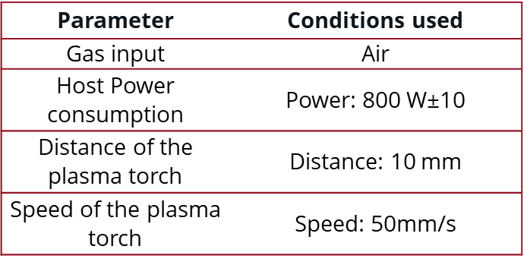
The concept starts with the localised treatment of a dense solid electrolyte using atmospheric-pressure plasma. Plasma treatment modifies the outermost surface of the ceramic, increasing its surface energy and wettability and creating a more favourable interface for the subsequent deposition step. Importantly, this treatment can be performed locally and at ambient pressure, without altering the bulk properties of the electrolyte.
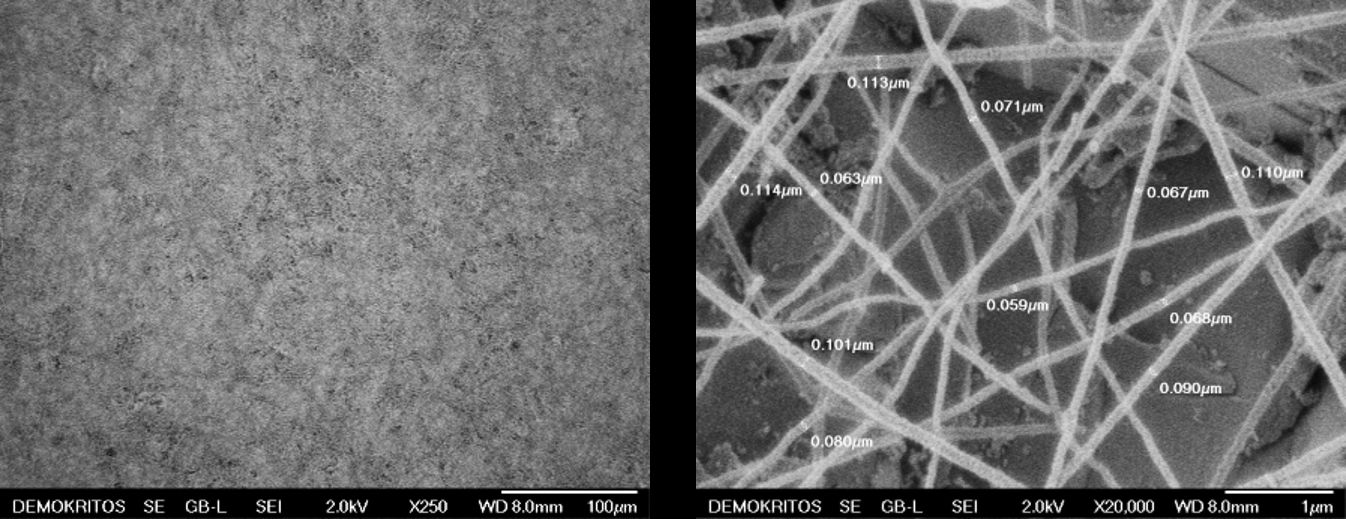
The activated surface is then used directly as the substrate for electrospinning of oxide-precursor nanofibres. Electrospinning is particularly attractive for solid oxide electrodes because it can generate interconnected fibrous networks with high surface area, open porosity and efficient pathways for gas transport. Direct deposition onto dense ceramic electrolytes, however, is challenging because their low electrical conductivity can disturb the electric field and lead to non-uniform fibre collection. The emerging concept therefore combines surface activation with electric-field management and controlled substrate positioning to improve fibre capture and deposition uniformity.
Timing is another important parameter. Plasma-induced surface activation can gradually relax after treatment. Rather than treating this as an uncontrolled experimental variable, the approach considers the activation-to-deposition time window as a defined processing parameter, linking surface chemistry directly to the subsequent nanofibre deposition step.
Finally, the deposited precursor fibres undergo a carefully controlled thermal-conversion process. The objective is to remove the polymer carrier and form the desired ceramic electrode while preserving as much of the original porous nanofibrous architecture as possible. Controlled heating is particularly important for limiting cracking, fibre collapse and delamination from the underlying electrolyte.
In short, the concept brings together:
- Localised plasma activation to prepare the ceramic electrolyte surface and improve interfacial interaction
- Direct electrospinning to create high-surface-area, porous nanofibrous electrode architectures
- Electric-field management to improve deposition on dense, poorly conducting substrates
- A controlled activation-to-deposition window to turn surface ageing into a measurable processing parameter
- Optimised thermal conversion to transform precursor fibres into a bonded porous ceramic electrode while preserving their functional microstructure
The broader goal is to establish a clear process–structure–performance relationship: linking plasma conditions, surface properties, fibre deposition and thermal treatment to electrode morphology, interfacial integrity and ultimately electrochemical behaviour.
By engineering the electrode–electrolyte interface before the electrode is fully formed, rather than trying to correct interfacial limitations afterwards, this approach opens a promising route towards more reproducible nanostructured electrodes for SOFC, SOEC and reversible solid oxide cell technologies. It also provides a basis for future development of scalable, ambient-pressure processing sequences in which surface activation and nanofibre deposition can eventually be integrated into a continuous manufacturing workflow.